


 Complete Your
Collection


 Secure Checkout
 30-Day Guarantee




Short answer
Laundry sheets are made to dissolve in water, and plenty of people use them on cool everyday washes. The honest picture from testers is mixed, though. Good Housekeeping UK (September 2026) and The Independent (April 2026) both rated several sheets well on home washes, but neither published cold-wash results. In the US, Wirecutter found sheets weaker than traditional detergents at stains and odours, especially in cold water. In short, sheets suit lightly soiled everyday loads if you follow the tips below, and heavy soiling needs a warmer, longer cycle.
Get a sheet to dissolve fully on a cold wash
- Put the sheet in the empty drum, before the clothes.
- Leave a hand's width of space at the top of the drum.
- Tear the sheet in half for a small load. BioPure gives up to 60 washes from 30 sheets this way.
- Short "quick wash" cycles give the sheet less time in water. If you see bits, switch to a longer cycle.

When to turn the temperature up
Follow the care label first. Heavily soiled bedding, towels and sportswear are where a warmer, longer cycle earns its keep. Use two BioPure sheets on a heavy load.
Why bother with sheets at all?
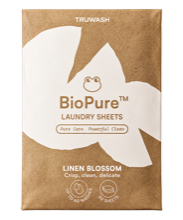
No jug, no measuring cap, no drips down the side of the bottle. BioPure comes in a card box with a card insert, no plastic wrap and no PVA film.

Get BioPure: 30 sheets, up to 60 washes Backed by our 30-day money-back guarantee.
FAQ
Do laundry sheets dissolve in cold water?
They're designed to dissolve in water. Put the sheet in the drum first and avoid overfilling for the best result.
What temperature should I wash at with laundry sheets?
Follow the garment's care label. Most everyday loads go on a standard cycle; use a warmer, longer cycle for heavily soiled items.
Why are there bits of sheet on my clothes?
Usually the drum is overpacked or the cycle is very short. Load the sheet first, leave space and pick a longer cycle.


